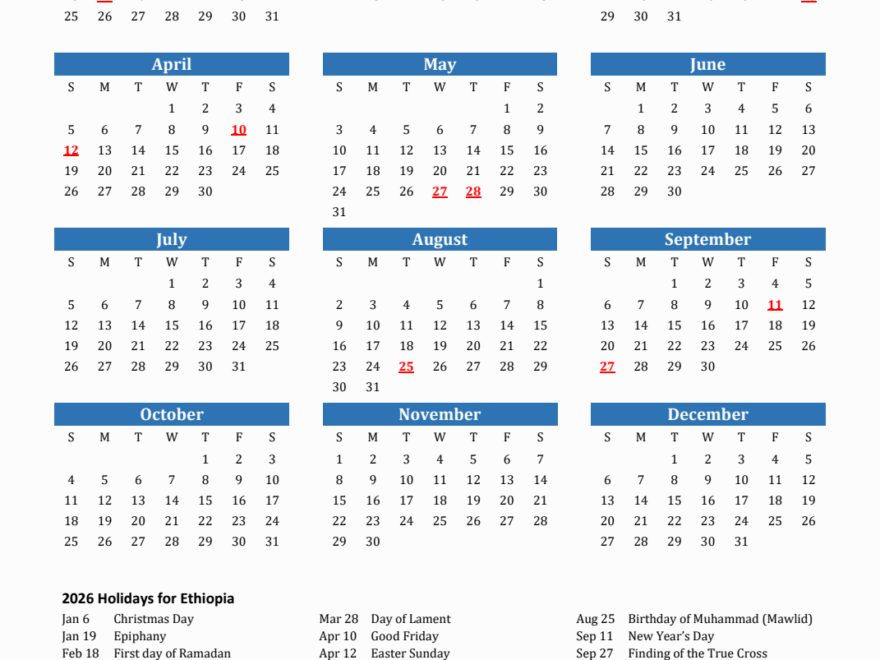
Have you ever wondered how the Ethiopian calendar compares to the Gregorian calendar? With a unique system that includes 13 months, the Ethiopian calendar offers a different way to track time.
As we look ahead to the year 2026, let’s explore how the Ethiopian calendar and the Gregorian calendar align, and how you can easily convert dates between the two systems.
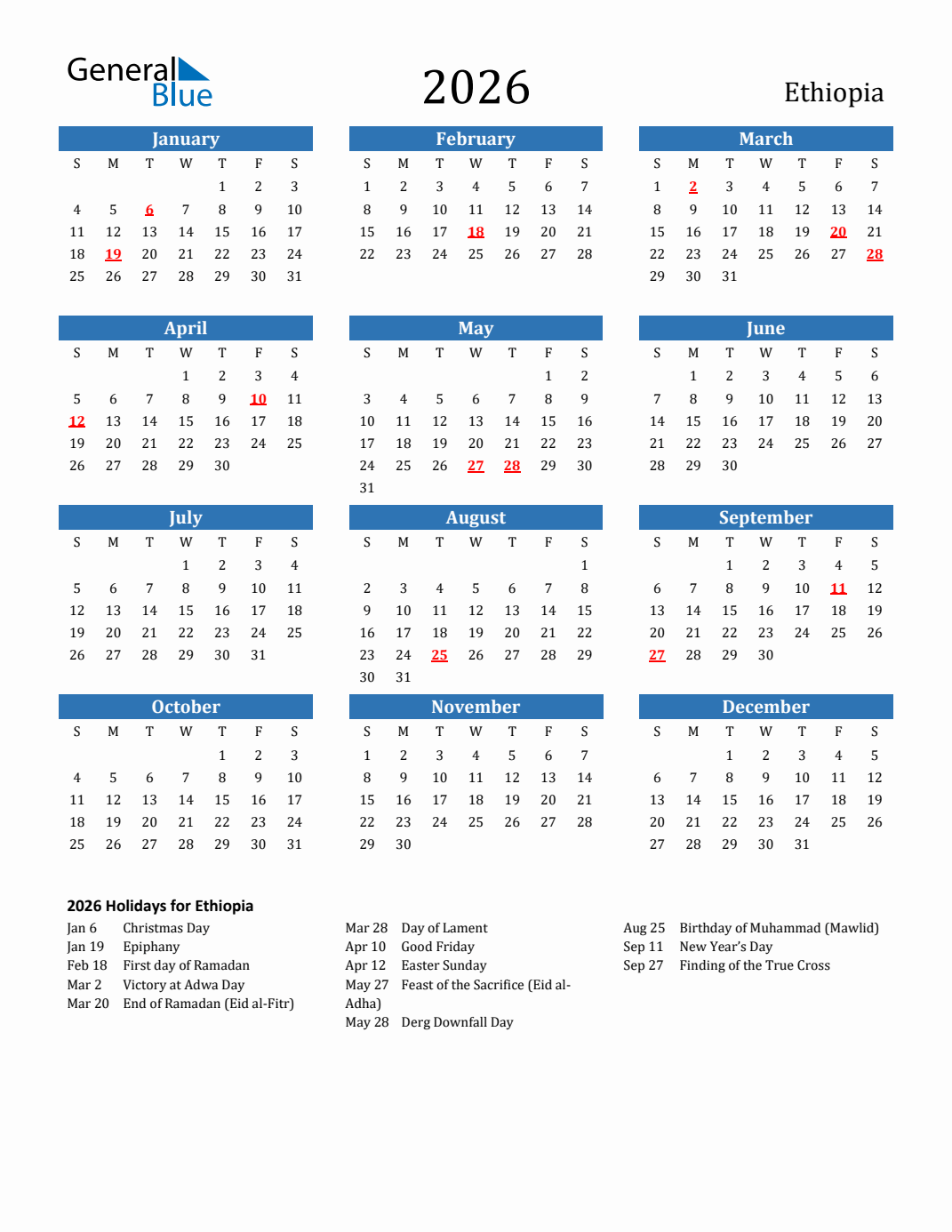
2026 Ethiopian Calendar To Gregorian
2026 Ethiopian Calendar To Gregorian
The Ethiopian calendar, also known as the Ge’ez calendar, is around 7-8 years behind the Gregorian calendar. This means that while the Gregorian calendar is currently in the year 2021, the Ethiopian calendar is in the year 2013.
To convert dates from the Ethiopian calendar to the Gregorian calendar, you can simply add 8 years to the Ethiopian year. For example, in the Ethiopian calendar, the year 2014 corresponds to the year 2022 in the Gregorian calendar.
Another key difference between the two calendars is that the Ethiopian calendar has 13 months, with 12 months consisting of 30 days each and a 13th month known as Pagumē, which has 5-6 days in a common year and 6-7 days in a leap year.
While the Ethiopian calendar follows a different system than the Gregorian calendar, understanding how to convert dates between the two can help you navigate time differences and historical events that use the Ethiopian calendar.
As we approach the year 2026, keep in mind the unique characteristics of the Ethiopian calendar and how it differs from the Gregorian calendar. Whether you’re celebrating holidays or marking important events, knowing how to convert dates between these two systems can enhance your understanding of timekeeping around the world.
[if_img 3]
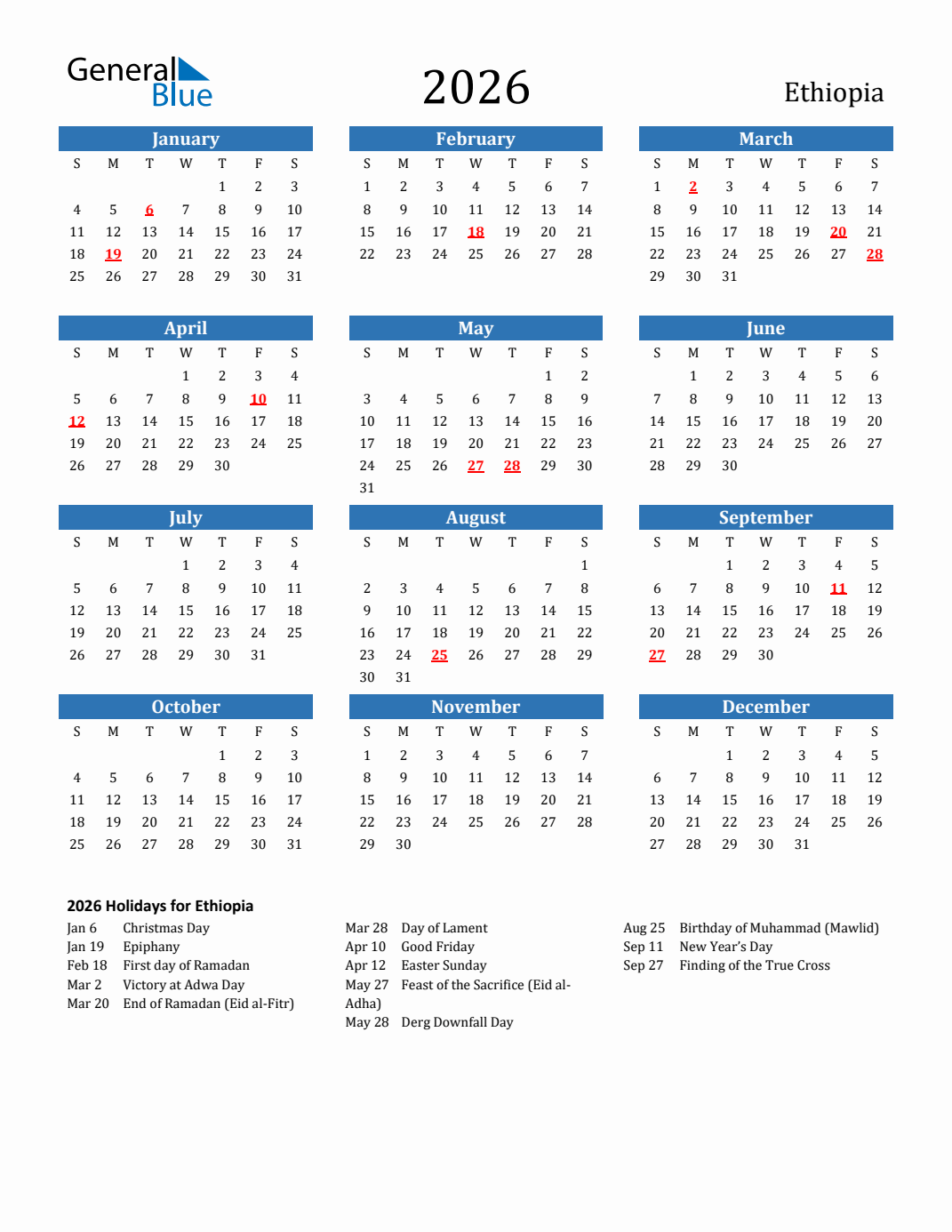
2026 Ethiopia Calendar With Holidays