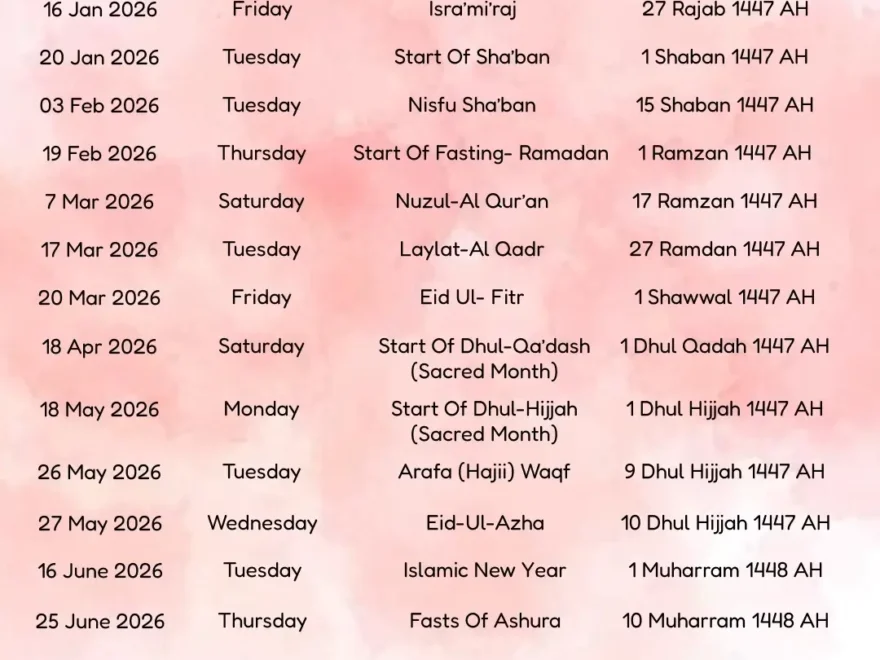
Do you ever wonder how different cultures keep track of time? The Islamic calendar and the Gregorian calendar are two systems used globally. Each calendar has its own unique characteristics and significance.
Islamic calendar, also known as the Hijri calendar, is based on the lunar cycle, consisting of 12 months in a year of 354 or 355 days. It is used by Muslims worldwide for religious purposes, such as determining the dates for fasting during Ramadan.
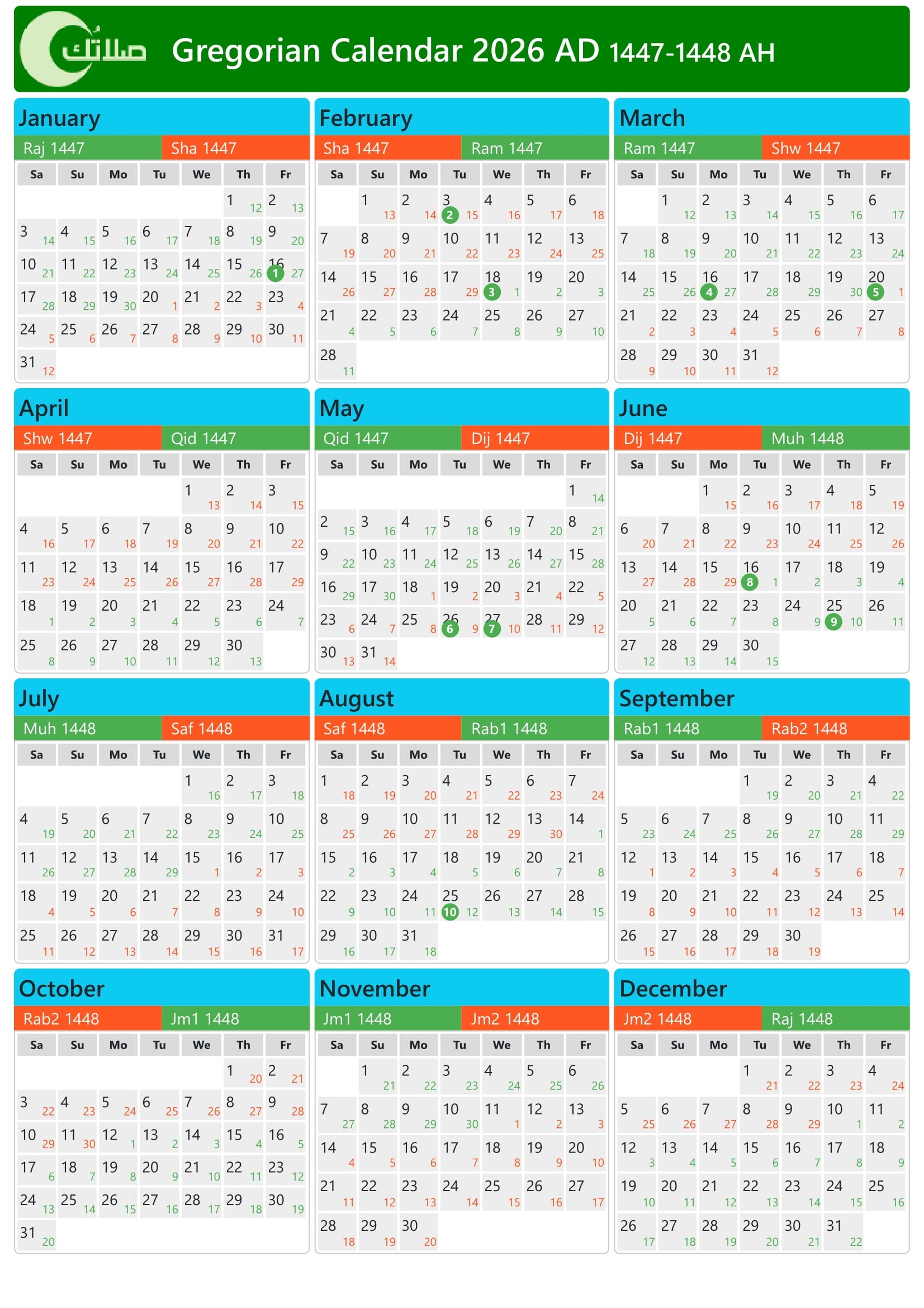
Islamic Calendar Vs Gregorian Calendar 2026
Islamic Calendar Vs Gregorian Calendar 2026
On the other hand, the Gregorian calendar is a solar calendar introduced by Pope Gregory XIII in 1582. It is the most widely used calendar system in the world, with 365 days in a common year and 366 days in a leap year.
One key difference between the two calendars is the way they calculate months and years. While the Islamic calendar is based on the phases of the moon, the Gregorian calendar follows the Earth’s rotation around the sun.
In 2026, the Islamic calendar will be 1447 AH (After Hijra) and the Gregorian calendar will be 2026 AD (Anno Domini). This highlights the cultural and religious diversity in how people mark time and celebrate important events.
Despite their differences, both calendars serve as important tools for organizing social, religious, and cultural events. Whether you follow the Islamic calendar or the Gregorian calendar, each system has its own significance and plays a vital role in shaping the way we perceive time.
In conclusion, the Islamic calendar and the Gregorian calendar offer unique perspectives on timekeeping and cultural traditions. Understanding the differences between these two systems can help us appreciate the diversity of human experience and the ways in which we mark the passage of time.
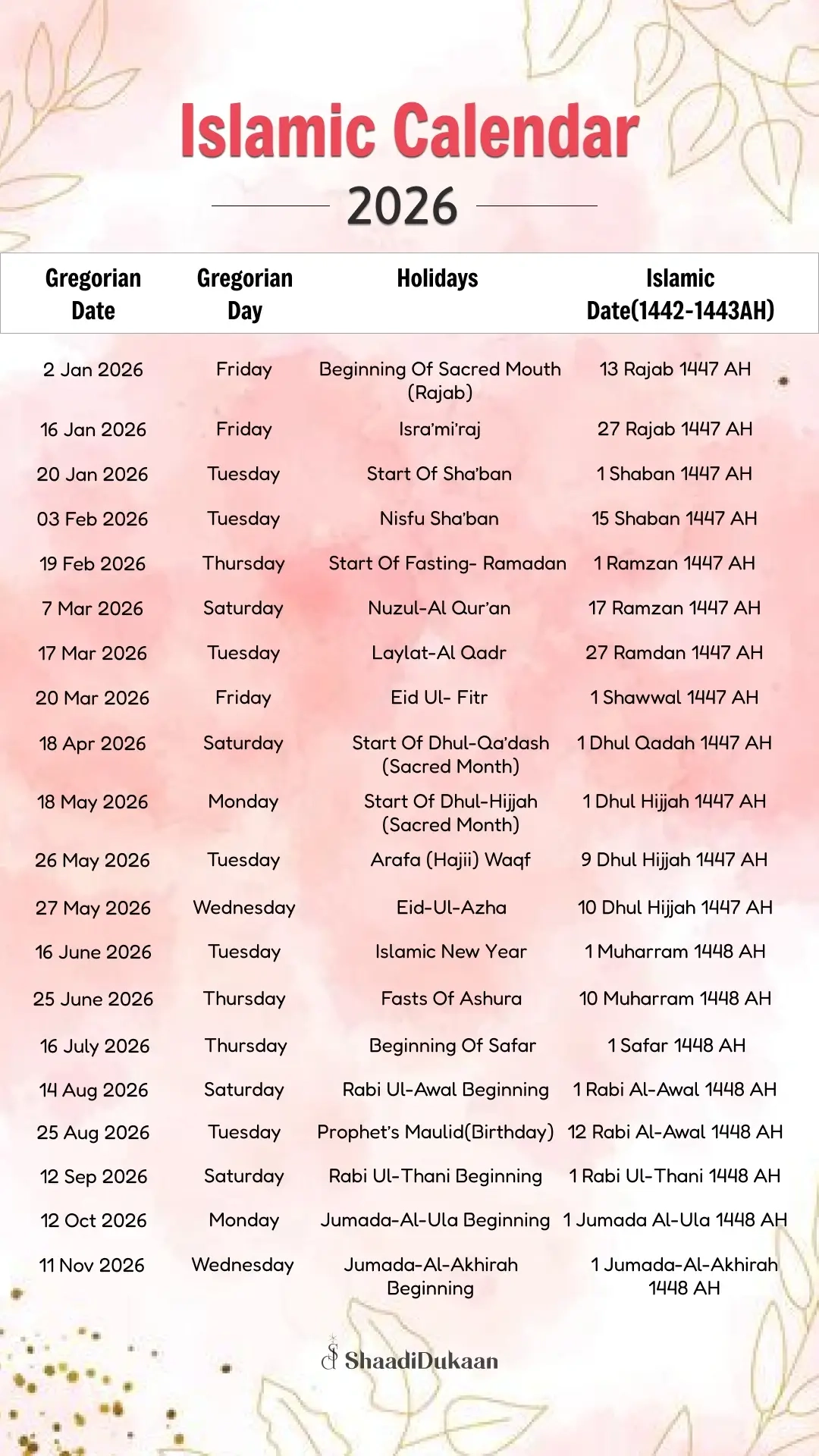
[if_img 3]
Islamic Wedding Dates 2026 Auspicious Days To Say Qubool Hai